page / catholic apologetics and sacramental theology
Confession to a Priest: The Biblical Case for Reconciliation
Why confess sins to a priest? Explore John 20:23, James 5, the power to forgive and retain sins, and how Catholic Reconciliation serves Christ's mercy.
Part of the Catholic learning prayer collection.
In brief
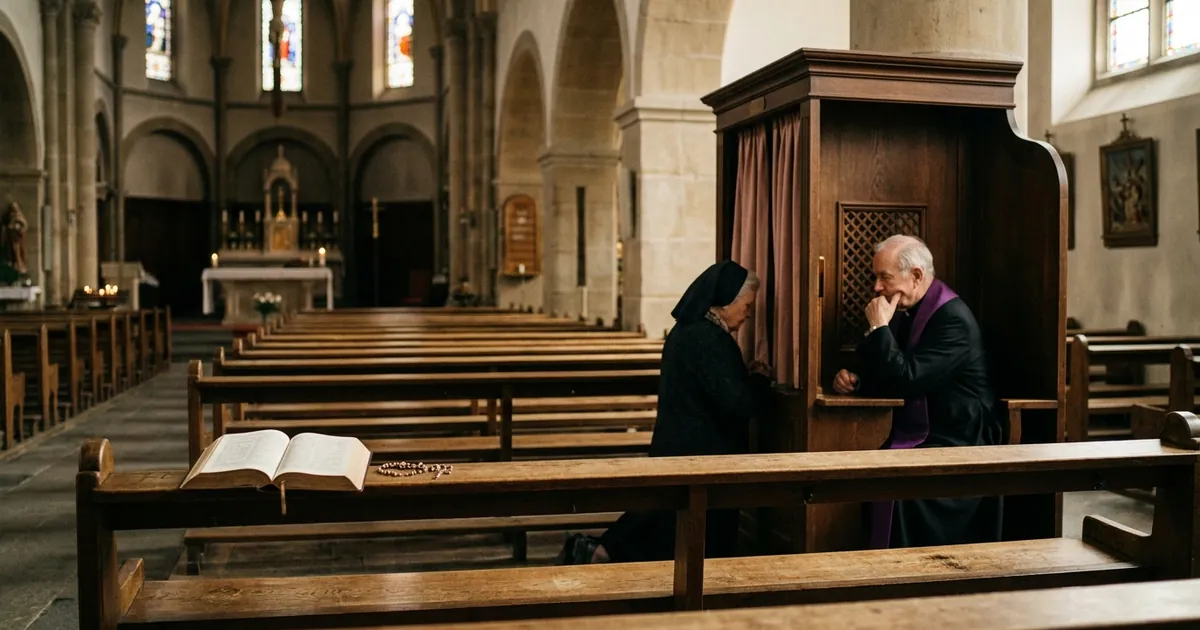
Catholics confess sins to a priest because Jesus entrusted the apostles with a ministry of forgiveness and retention: “If you forgive the sins of any, they are forgiven; if you retain the sins of any, they are retained” (John 20:23). The priest does not forgive by personal power. God forgives through Christ, and the priest serves as the sacramental minister who hears the confession, exercises pastoral judgment, and announces absolution.
Private prayer for forgiveness is essential and should happen immediately when a person turns back to God. Catholic Confession adds a visible, ecclesial act of reconciliation in which the penitent names serious sins, receives counsel, makes an act of contrition, and hears the Church's sacramental absolution.
A short prayer before Confession
> Merciful Father, show me the truth about my sin without letting shame hide your love. Give me courage to confess honestly, humility to receive counsel, and grace to repair what I can. Through Jesus Christ, restore me to friendship with you and teach me to forgive others. Amen.
John 20:22–23 and the authority to forgive or retain
On the evening of the Resurrection, Jesus breathes on the apostles and says, “Receive the Holy Spirit.” He then speaks of forgiving and retaining sins. The setting matters: this is not merely a general instruction to tell people that God is merciful. The apostles receive a ministry involving discernment and a real declaration of forgiveness.
The word “retain” is especially significant. If the apostles were only announcing a universal promise without hearing the person's situation, there would be no pastoral act to exercise. Catholics infer that Christ intended a ministry in which sins are confessed and the minister judges how to guide the person toward reconciliation.
The passage does not mean that priests can refuse mercy because they dislike someone. A priest must follow Christ's command, Church law, and the duties of justice. Where a person is in danger, being abused, or involved in criminal conduct, sacramental counsel does not replace civil protection, safeguarding, or emergency help.
“Only God can forgive sins”
Catholics agree that God alone is the source of forgiveness. In Mark 2, Jesus proves his divine authority by forgiving the paralytic's sins. The Catholic claim is that Jesus, the divine Son, chose to share a ministry of reconciliation with human apostles and their ordained successors.
This does not make priests little gods. A priest is an instrument, like a human voice through which the Gospel is preached or water through which Baptism is celebrated. The power belongs to Christ; the minister serves the sacrament.
The words of absolution make this clear. The priest does not announce “your sins are forgiven because I am morally superior.” He invokes the Father of mercies and absolves in the name of the Father, Son, and Holy Spirit.
James 5:14–16
James tells the sick to call the elders of the Church, who pray and anoint them. He adds that, if the person has committed sins, they will be forgiven. James also says, “Confess your sins to one another, and pray for one another, that you may be healed.”
The passage includes the whole community's call to repentance, but it gives the elders a specific ministry of prayer and anointing connected with forgiveness. Catholics read this alongside John 20 and the Church's sacramental practice. The text does not provide every later detail of the Roman Rite, but it shows that forgiveness and healing belong to the visible ministry of the Church, not only to private spiritual experience.
The Old Testament priestly pattern
The Old Testament does not present forgiveness as a purely invisible event in every circumstance. Priests receive offerings, examine ritual situations, and declare people clean or restored according to God's law. Leviticus describes atonement and forgiveness in connection with priestly ministry.
The Sacrament of Reconciliation is not a repetition of Levitical sacrifices. Christ's one sacrifice is the source of forgiveness. The Catholic argument is that God has long used visible ministers and signs, and the New Covenant fulfills that pattern through Christ's death and Resurrection rather than discarding all ecclesial mediation.
Why speak sins aloud?
The requirement to confess serious sins to a priest is not meant to satisfy curiosity. It makes repentance concrete and allows the minister to offer appropriate counsel, assign a penance, and determine whether the person is disposed to receive absolution. A priest cannot responsibly exercise a ministry of “forgive or retain” without knowing what the person is bringing.
Speaking aloud also resists vague self-justification. The penitent names actions honestly, receives mercy in an audible form, and leaves with a concrete invitation to repair what can be repaired. This is not a demand to describe unnecessary graphic details. The practical guide Confession Guide can help a person prepare.
The seal of Confession and safety
Catholic priests are bound by the sacramental seal and may not reveal what is confessed. The seal does not prevent a person from reporting abuse, seeking safety, or telling a trusted professional what happened to them. A victim is not morally required to keep an abuser's secret because something was said in a religious setting.
A confessor should never use Confession to demand sexual details that are not needed, manipulate a penitent, discourage medical or legal help, or create dependency. If a priest behaves abusively or asks for inappropriate information, seek help from a trusted person, diocesan safeguarding office, civil authorities, or emergency services as appropriate.
Confession and psychological fear
Many people fear humiliation, punishment, or being unable to remember everything. The sacrament is not a performance. A person can begin by saying, “Father, I am nervous and do not know how to start.” The priest can guide the conversation.
Scrupulosity can also make Confession feel endless. A person with obsessive fear about sin should seek a stable confessor and qualified mental-health care. Repeating confessions or seeking certainty beyond what the sacrament requires can deepen anxiety rather than heal it.
Related prayers and guides
Anti-thin-content test
- Clear reason to exist: explains John 20, James 5, priestly ministry, and the Catholic answer to “only God forgives.”
- Practical usefulness: reduces fear, explains how to speak sins aloud, includes a prayer, and gives safety and scrupulosity boundaries.
- Distinctive depth: presents the sacrament positively without ignoring abuse prevention or the need for professional help.
- Intent satisfied: a reader can understand why Catholics confess to a priest and take a first step toward Reconciliation.