page / about and institutional trust
Our Mission: Building the Domestic Church
Learn why Prayer to St. Joseph exists, how it serves the domestic church, and its commitment to clear, beautiful, source-conscious Catholic prayer resources.
In brief
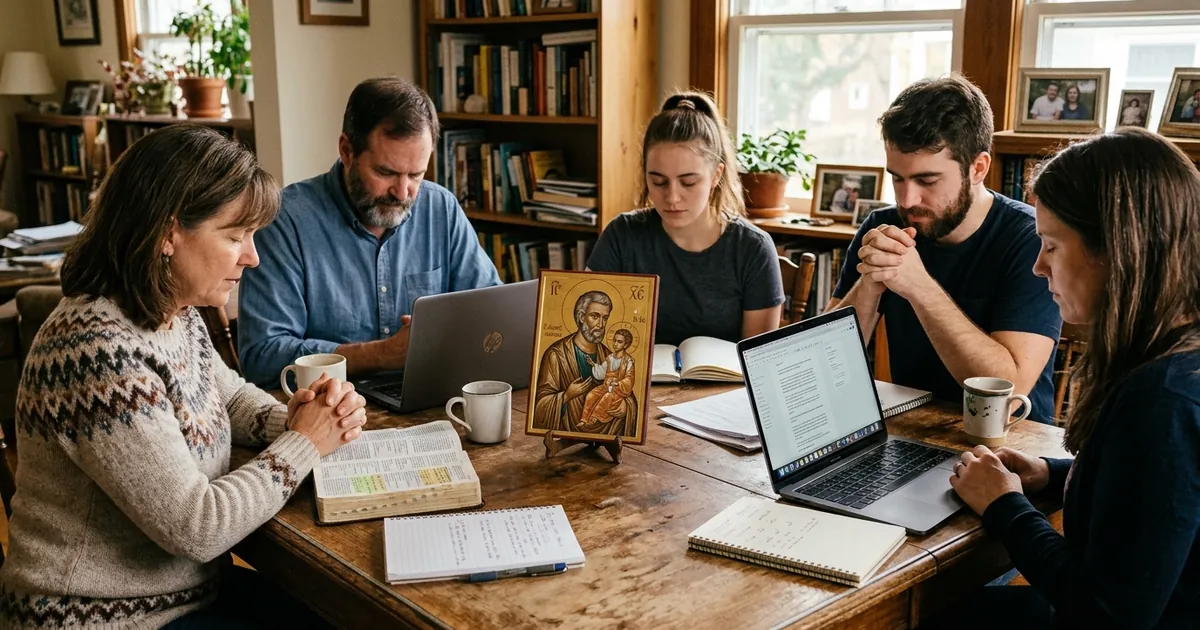
Unfailing Prayers to St. Joseph is a family Catholic digital library for people who want to pray, learn, and bring the faith into ordinary life. Its mission is to make traditional prayers, novenas, devotional guides, and Catholic explanations clear enough to use at home while remaining careful about sources, doctrine, historical claims, and the limits of online guidance.
The project is oriented toward the domestic church: the family and home as places where faith is practiced through prayer, forgiveness, service, Scripture, and love. It is not a parish, diocese, seminary, or substitute for a priest, catechist, doctor, therapist, or civil authority. It is an editorial resource intended to help readers take a faithful next step.
A prayer for the home
> Saint Joseph, guardian of the Holy Family, help our home become a place of patience, truth, work, welcome, and prayer. Teach us to protect one another, to forgive quickly, and to notice the needs of our neighbors. Lead us to Jesus, who is the center of every Christian home. Amen.
Why Saint Joseph?
Saint Joseph is central because the Gospel presents him as a man who receives God's call, protects Mary and Jesus, works quietly, and acts without seeking public recognition. Scripture records no spoken sentence from him, yet his obedience is visible in concrete decisions: he takes Mary into his home, protects the child, and provides for the Holy Family.
That quietness is not passivity. Joseph's silence is compatible with courage, responsibility, and attentive action. He offers a helpful pattern for readers who feel overwhelmed by noise, fear, or pressure to perform spirituality publicly.
The project does not claim that devotion to Joseph solves every problem or guarantees a material outcome. Joseph points beyond himself to Jesus Christ and to a life of faithful service. His patronage can encourage family prayer, work offered to God, protection of the vulnerable, and patient discernment.
The domestic church
The phrase domestic church describes the family as a small community where Christian life is learned and lived. A home becomes more prayerful not through expensive objects or perfect routines, but through repeated acts of love:
- blessing a child before school;
- praying at the beginning or end of the day;
- reading a short Gospel passage;
- apologizing and forgiving after conflict;
- remembering the sick and the dead;
- serving a neighbor without seeking applause.
The library aims to give families usable words and simple context. A person can begin with one prayer and one honest minute. The goal is not to create anxiety about doing devotion “correctly,” but to make prayer easier to enter and easier to continue.
Our editorial pillars
Faithful to Catholic sources
We aim to distinguish Scripture, Catholic doctrine, liturgical texts, historical tradition, private revelation, and original devotional composition. When a claim is uncertain or belongs to pious tradition, it should be labeled as such. The project does not claim clerical approval or academic review unless a specific page identifies a real reviewer and source.
Clear and usable
Readers often arrive while tired, grieving, busy, or searching on a phone. The prayer or direct answer should be easy to find. Explanations should use plain English, readable typography, useful headings, and enough context to prevent a quote from being misunderstood.
Beautiful without manipulation
Beauty can help attention become prayer, but design should not pressure people through fear, miracle promises, or emotional manipulation. Images should be descriptive and respectful. A page should never imply that a devotional object, novena, or donation guarantees a spiritual or material result.
Honest about limits
Prayer belongs alongside qualified medical, mental-health, legal, financial, and safeguarding help when those needs arise. The project will not present a prayer as a treatment, a legal strategy, or a substitute for emergency action. It will also correct mistakes rather than protect the appearance of certainty.
Who we serve
The library is intended for:
- families and parents who want manageable ways to pray together;
- individual readers seeking a prayer for a particular need or season;
- catechists and RCIA leaders who need clear starting points and source-aware explanations;
- people who are grieving, ill, afraid, or discerning and need prayer accompanied by appropriate practical care;
- seekers and questioning Christians who deserve charitable answers rather than caricatures;
- Catholics returning to the Church who need a simple place to begin again.
We do not assume that every reader knows the vocabulary of theology or has access to a large parish library. We also do not assume that every question can be solved on a webpage. When a reader needs a sacrament, spiritual direction, professional treatment, or immediate protection, the responsible next step is a local qualified person.
What readers can expect
Across the library, we aim to place the prayer or direct answer first, followed by a practical way to use it, context and tradition, visible sources, related resources, and a clear note where professional help is relevant. Content is written for reading and prayer, not for filling a word count.
Readers can also expect differences between page types. A traditional prayer should not be presented as an original composition. An original prayer should be labeled as such. A saint's private revelation should not be treated like public doctrine. A devotional promise should not be presented as a guarantee.
“Go to Joseph”
Genesis 41:55 records Pharaoh's instruction to go to Joseph during famine. Catholic devotion later hears an echo in the appeal to Saint Joseph. The phrase is a devotional invitation, not a claim that Joseph replaces God or controls providence.
To “go to Joseph” here means to learn from his fidelity, ask his intercession, and let that devotion lead to Jesus, Mary, responsibility, and charity. The library's purpose is not to make readers dependent on a website. It is to help them pray and then live the prayer in a parish, family, workplace, and neighborhood.
Related prayers and guides
Anti-thin-content test
- Clear reason to exist: explains the site's identity, Saint Joseph focus, domestic-church purpose, readers, and editorial limits.
- Practical usefulness: gives home-prayer examples, a prayer, and clear next steps for professional or parish help.
- Distinctive depth: avoids corporate language while remaining honest about the project's authority and limitations.
- Intent satisfied: a reader can decide whether this library is trustworthy and relevant to their need.