page / catholic apologetics and christology
Mary, Mother of God (Theotokos): The Title That Protects Christ
Why is Mary called the Mother of God? Explore Theotokos, Luke 1:43, the Incarnation, and the Council of Ephesus' defense of Christ's one divine Person.
Part of the Catholic learning prayer collection.
In brief
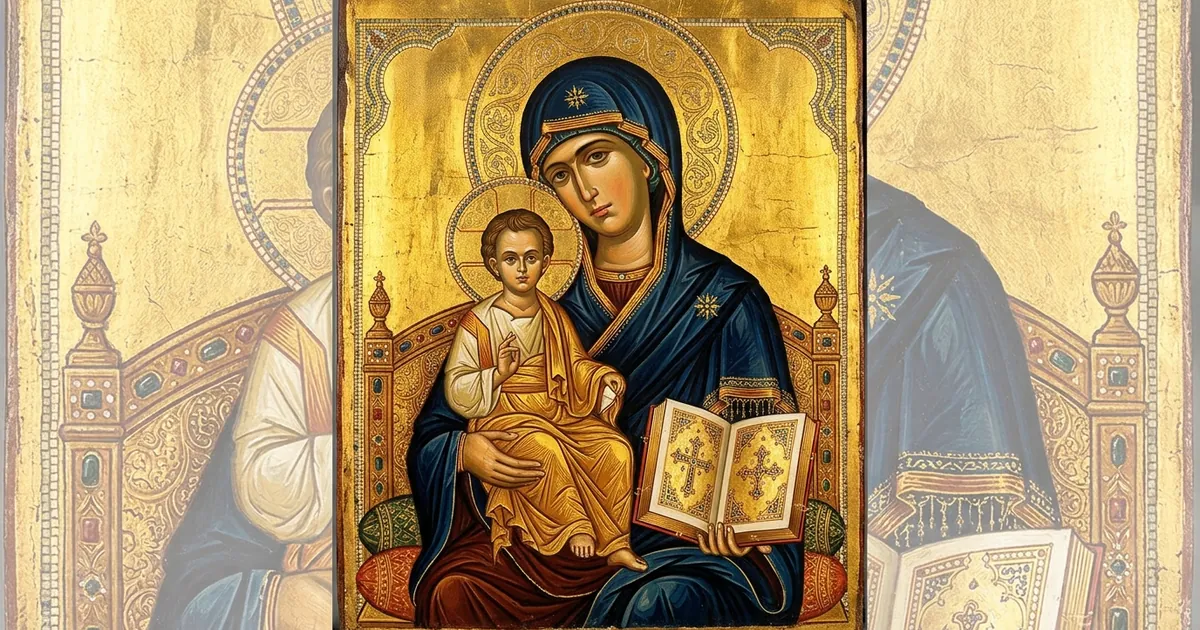
Catholics call Mary Theotokos, Greek for “God-bearer” or “Mother of God,” because the child she conceived and bore is the one divine Person of the Son. The title does not mean that Mary created God's divine nature, existed before God, or is the source of the Trinity. It means that the person born from her is truly God the Son, who assumed a true human nature.
The title is therefore primarily about Jesus. It protects the confession that Christ is one Person, fully divine and fully human. Mary is the mother of the Person, not the maker of the divine nature. Calling her only the mother of a separate human person would split the Incarnation into two subjects.
A prayer with Mary, Mother of God
> Mary, Mother of God, help me confess the truth about your Son with humility and joy. Teach me to receive God's Word, to keep faith in difficult moments, and to let every honor given to you lead me toward Jesus Christ. Pray that my life may magnify the mercy of God. Amen.
Mothers give birth to persons, not abstract natures
A mother gives birth to a person who has a nature; she does not give birth to “human nature” as an abstract object. In the case of Jesus, the person conceived in Mary's womb is the eternal Word. The Word did not begin to exist when Mary conceived him; rather, the eternal Son began a human life from her.
Catholics can therefore say both:
- Mary is truly the mother of Jesus according to his humanity.
- Jesus is truly God, and the person she bore is the divine Son.
These statements do not make Mary divine. They protect the unity of Jesus. The Church's language about Mary follows its language about Christ.
Luke 1:43 — Mother of my Lord
Elizabeth, filled with the Holy Spirit, asks why the mother of her Lord should come to her (Luke 1:43). The phrase does not reproduce the later Greek word Theotokos, but it gives the biblical foundation for the title. Mary's child is the Lord, and Elizabeth recognizes the mystery before Jesus' birth.
The Greek word Kyrios can refer to a human master in some contexts, but it is also the New Testament's ordinary title for the risen Jesus and the Greek Bible's rendering of God's name. The context of Luke 1—angelic announcement, the Son of the Most High, and the Holy Spirit—supports a divine reading of “Lord.” The verse is not a standalone philosophical definition, but it fits the Church's confession of the Incarnation.
Mary and the Ark of the Covenant
Luke's Visitation contains echoes of David bringing the Ark to Jerusalem in 2 Samuel 6: movement through the hill country, joy, a three-month stay, and a question about the Lord's presence. Catholics see Mary as the new Ark because she carries the Word made flesh rather than tablets, manna, or Aaron's rod.
The typological connection is a theological reading, not a claim that Luke copied every detail as a coded proof. It helps Christians see how the Gospel presents Mary's pregnancy: the Lord has come among his people, and the mother of the Lord is the bearer of his presence.
Other biblical foundations
- Galatians 4:4: God sends his Son, born of a woman. The one born of Mary is already the Son of God.
- Isaiah 7:14: Christians read the promised child called Immanuel, “God with us,” in relation to the virgin birth.
- Luke 1:31–35: The angel says that Mary's child will be called the Son of the Most High and the Son of God.
- John 1:14: The Word becomes flesh. Mary's motherhood belongs to the real human history of the eternal Word.
The New Testament does not need the exact later noun Theotokos to teach the underlying truth. Christian doctrine often gives a precise name to what Scripture presents through several passages.
The Council of Ephesus in 431
The Council of Ephesus affirmed Theotokos during a controversy about how to speak of Christ's divine and human identities. The title was not introduced to make Marian devotion more impressive. It was used to protect the unity of the person of Jesus.
The debate involved Nestorius and Cyril of Alexandria, with complex theological and political circumstances. A concise summary should not turn the participants into cartoon villains. The enduring issue is clear: Christians must not speak as though a human Jesus and a divine Son were two separate persons joined only by cooperation or honor.
The Council's teaching is expressed in the Church's later confession that the one Son is fully God and fully human. Mary's title serves that Christological confession.
What Theotokos does not mean
The title does not mean:
- Mary is a goddess or part of the Trinity;
- Mary existed before God or generated God's divine nature;
- Mary is equal to the Father, Son, and Holy Spirit;
- Christians must pray to Mary instead of praying to God;
- every later claim about Mary is proved by Luke 1:43 alone.
Catholics honor Mary as a creature who received extraordinary grace because of her relationship to Christ. Her greatness remains dependent on God. “My soul magnifies the Lord,” she says; her song directs attention to God's mercy.
Why the title matters today
Theotokos protects the Christian message from two opposite errors. One error makes Jesus only a remarkable human being who later receives divine honor. The other treats his humanity as a costume loosely attached to a divine being. The Catholic confession is that the same Son is truly God and truly human.
This matters for salvation. If Jesus is not truly human, he does not share our life. If he is not truly divine, his saving work does not reveal and unite us to God. Mary's title keeps the mother and the Son inside the real mystery of the Incarnation.
Related prayers and guides
Anti-thin-content test
- Clear reason to exist: explains Theotokos through person and nature, Scripture, typology, and the Council of Ephesus.
- Practical usefulness: answers whether the title is biblical and what it does not mean.
- Distinctive depth: keeps Marian honor subordinate to the Christological purpose of the title.
- Intent satisfied: a reader can understand why Catholics use “Mother of God” without confusing Mary with God.