liturgical-year / seasonal traditions guide
Catholic Christmas and Epiphany Traditions for the Home
Keep Christmas prayerful beyond December 25 with Catholic traditions for the Twelve Days, Epiphany chalk, home prayer, and the visit of the Magi.
Part of the Liturgical Year prayer collection.
In brief
Catholic Christmas does not have to end on December 26. The liturgical calendar continues to celebrate the mystery of Christ's birth through the Christmas season, with local calendars marking feasts such as Saint Stephen, Saint John, the Holy Innocents, Mary Mother of God, the Epiphany, and the Baptism of the Lord. The exact dates and length of the season should be checked against the calendar used by your parish or bishops' conference.
A family can extend Christmas through Scripture, shared meals, music, gifts of mercy, the Nativity scene, and an Epiphany house prayer. These customs are not tests of Catholic identity. Their purpose is to help the household receive the Incarnation with gratitude and let the joy become charity.
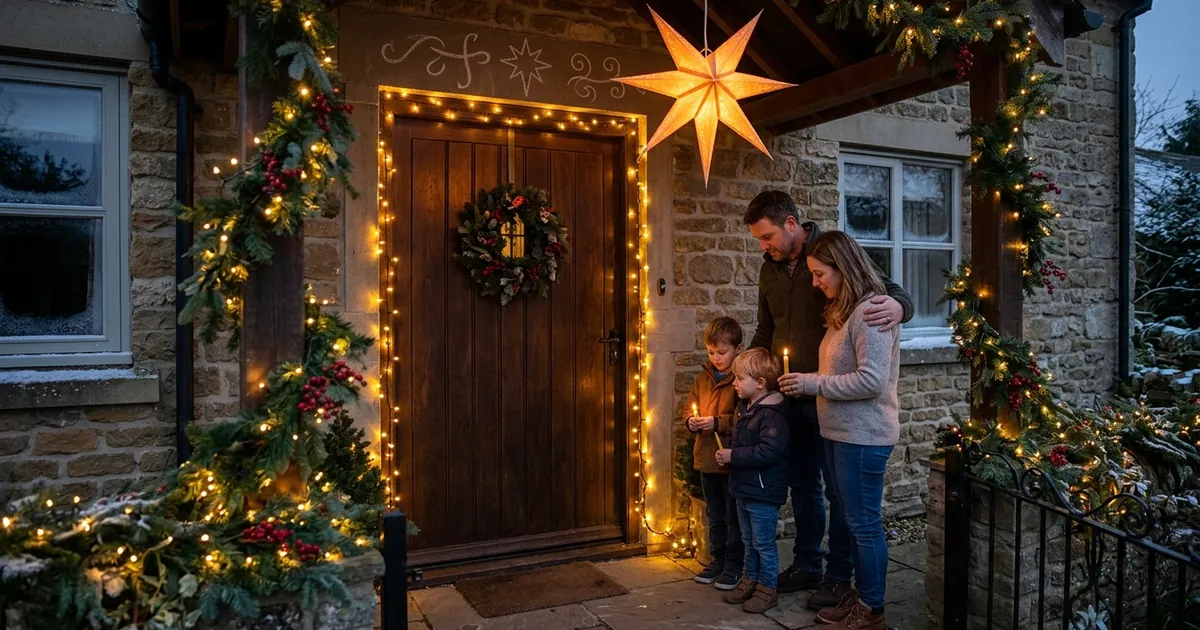
A family prayer at the door
If your parish provides an approved Epiphany house-blessing rite, use it. Otherwise, a family can pray this original devotion:
> God of light, as the Magi sought and worshipped Christ, guide our household toward your truth. May everyone who lives here practice patience, welcome, and mercy. Bless those who enter, protect those who are vulnerable, and teach us to offer our time and gifts for the good of others. May Christ bless this dwelling and make it a place of peace. Amen.
Make the Sign of the Cross, read Matthew 2:1–12, write the inscription with ordinary chalk if desired, and pray for the people who live in or visit the home. Sprinkling holy water is optional; use it as a reminder of Baptism, never as magical protection. A priest or deacon can lead the formal house blessing according to the approved rite.
The days around Christmas
The popular phrase “Twelve Days of Christmas” refers to the period from Christmas Day toward Epiphany, but calendars and customs count the days differently. Rather than forcing every date into a rigid family program, use the feasts that actually appear in your local calendar:
- December 25 — Nativity of the Lord: celebrate the birth of Jesus Christ and hear the appointed Gospel.
- December 26 — Saint Stephen: remember the first Christian martyr and pray for courage joined to mercy.
- December 27 — Saint John the Apostle and Evangelist: give thanks for apostolic witness and the love proclaimed in his writings.
- December 28 — Holy Innocents: pray for children, families affected by violence, and those who grieve. Do not use the feast to frighten children.
- December 29–31: continue the Christmas octave with gratitude, rest, visits, and care for people who are alone.
- January 1 — Mary, Mother of God: contemplate the mystery of the Word made flesh and ask for peace.
- January 2–5: use the days before Epiphany for family prayer, Scripture, hospitality, and reflection on the hidden life of Jesus.
- Epiphany: celebrate the manifestation of Christ to the nations, according to the date observed locally.
- Baptism of the Lord: mark the close of the Christmas season where your local calendar places it.
Some parishes transfer a feast or celebrate Epiphany on a Sunday. Follow the parish calendar rather than a generic internet list.
A simple home rhythm
Each day, choose one practice:
- Read the day's Gospel or a short passage from Matthew 1–2, Luke 1–2, John 1, or Isaiah.
- Light a safe candle or look at the Nativity scene while praying.
- Invite a relative, neighbor, or parishioner who may be alone to share a meal or receive a call.
- Give a small gift of time or money according to the family's means.
- Sing one Christmas hymn and let the music continue beyond December 25.
- Ask children what the Gospel reveals about Jesus, not only what gifts they received.
Keep the rhythm flexible. A family with illness, work, travel, grief, or limited resources may celebrate with one quiet prayer. God is not measuring the number of decorations.
Epiphany: Christ revealed to the nations
In Matthew 2:1–12, the Magi come from the East and recognize the child Jesus. The Gospel presents their visit as a sign that Christ's mission reaches beyond one people. The Church reads Epiphany as a revelation of Jesus to the nations and as an invitation for every person to seek, worship, and follow him.
The gifts of gold, frankincense, and myrrh have traditionally been read as signs of kingship, divinity, and the suffering or burial of Christ. These interpretations support prayer, but they do not require a child to memorize symbolic meanings before enjoying the feast. Let the story remain a story of seeking, humility, danger, protection, and joy.
The Epiphany house-chalk tradition
In some Catholic cultures, families or parish ministers write an inscription above a door around Epiphany. A common form is:
20 + C + M + B + 26
Replace the first and last numbers with the current year's digits. The letters are traditionally connected both with the names of the Magi—Caspar, Melchior, and Balthasar—and with the Latin prayer Christus mansionem benedicat, “May Christ bless this house.” The interpretation can vary by local tradition.
The inscription is a visible prayer for the home, not a protective spell. Chalk does not keep away illness, accidents, evil, or conflict by itself. The household blessing matters when it leads to hospitality, truth, safety, reconciliation, and care for neighbors.
Family activities for Epiphany
- Move the Magi gradually toward the Nativity scene instead of placing them at the manger immediately.
- Prepare a simple meal from a family or cultural tradition.
- Give a gift to a shelter, pantry, parish outreach, or neighbor according to actual local needs.
- Make a star, map the Magi's journey, or read a child-friendly version of Matthew 2.
- Invite children to name a gift they can offer Christ through service.
- Keep the Nativity scene and Christmas music for the length of the local season.
Avoid turning another culture's food or clothing into costume. Epiphany can teach universality without reducing the nations to decorations.
Related reading
Anti-thin-content test
- Clear reason to exist: it helps families continue Christmas prayer through Epiphany with an accurate and flexible framework.
- Practical utility: calendar guidance, daily rhythm, chalk inscription, home prayer, and low-cost activities are included.
- Original depth: the seasonal feasts are connected with Matthew 2, hospitality, family life, and local variation.
- Trust boundary: no universal date claim, magical chalk claim, or pressure to maintain one decoration schedule.