post
The Solemnity of Saint Joseph: March 19
Learn why Catholics celebrate Saint Joseph on March 19, how the Solemnity fits within Lent, and how to observe the Saint Joseph Table with prayer, hospitality, and care for the poor.
Part of the Liturgical Year prayer collection.
In brief
March 19 is the Solemnity of Saint Joseph, husband of the Blessed Virgin Mary. Catholics celebrate Joseph as guardian of Jesus, faithful spouse, worker, and protector of the Church. A good celebration can include Mass, prayer, a family meal or Saint Joseph Table, hospitality, and practical care for people who are poor or alone.
Prayer for March 19
God our Father, on this solemnity we thank you for Saint Joseph,
faithful husband, guardian of Jesus, and servant of your saving plan.
Teach us his quiet courage, honest work, and care for those entrusted to us.
Help families find safety, workers find dignity,
and the Church serve the people who need welcome and protection.
Through Joseph's intercession, lead us closer to Christ.
Amen.
Source and tradition: original devotional composition by Unfailing Prayers, based on the themes associated with the liturgical celebration. It is not the official Collect from the Roman Missal.
What is a solemnity?
In the Catholic liturgical calendar, a solemnity is a principal celebration with a high liturgical rank. It is more than a private devotion or a cultural festival. The exact Mass texts, readings, obligations, and local observance should be checked in the current Roman Missal, parish bulletin, diocese, or bishops' conference.
March 19 can occur during Lent. The feast's liturgical precedence and local rules determine how it is celebrated in a particular place. Do not assume that every fasting or holy-day question has the same answer in every country.
The Saint Joseph Table
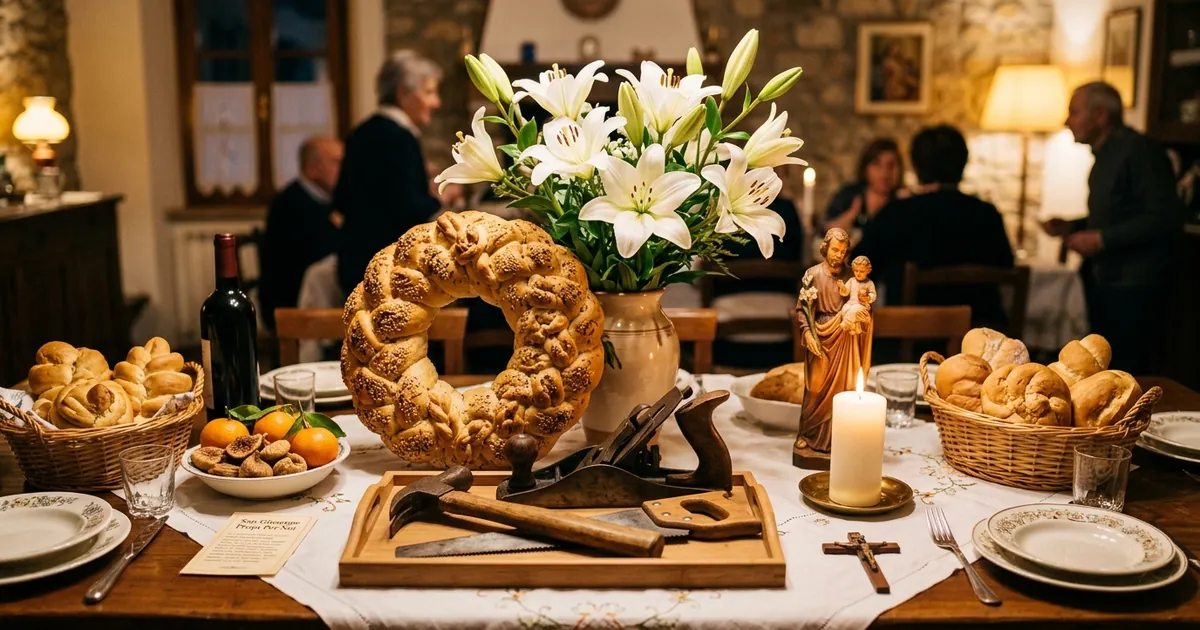
The Saint Joseph Table, or altar, is a Catholic folk tradition associated especially with Sicily and communities shaped by Sicilian immigration. Families may prepare a decorated table with bread, simple foods, flowers, and a prayer of thanksgiving. Some stories connect the tradition with asking Saint Joseph's intercession during famine or drought.
Practices vary by family and region. The most important element is not decoration but hospitality: many communities invite people who are poor, newly arrived, lonely, or in need to share food. A table that excludes the vulnerable misses the meaning of Saint Joseph's care.
A simple home table
- Place a crucifix or Saint Joseph image in a respectful location, never as a magic object.
- Read Matthew 1:18-25 or another Gospel passage about Joseph.
- Pray the feast-day prayer above.
- Prepare food within your means and invite someone who would genuinely welcome the meal.
- Give any offerings or surplus through a trustworthy parish or local organization.
If a large meal is not possible, share bread, a phone call, a grocery card, or an hour of practical help. The devotion does not require expensive decorations.
Food traditions
Some communities prepare meatless dishes, breads, pasta, pastries, or zeppole for Saint Joseph's Day. Recipes are cultural expressions, not universal liturgical requirements. Check local fasting guidance and health needs rather than assuming that a particular food practice applies everywhere.
The role of Mass
The Eucharistic celebration is the center of the solemnity. Check the parish schedule for the March 19 Mass, the current readings, and any local procession or blessing. If you cannot attend, pray with the readings or join an appropriate livestream while observing the spiritual obligations that apply to your situation.
Superstition and Saint Joseph's Day
Saint Joseph's intercession is not a mechanism for making a house sell, forcing a job offer, or producing luck through an object. Practices such as burying a statue to sell a home are popular claims, not Catholic liturgical teaching. Pray for guidance, then use a licensed professional, honest contract, and responsible decision-making for property or financial matters.
Sources & Tradition
Frequently asked questions
What is celebrated on March 19?
The Catholic Church celebrates the Solemnity of Saint Joseph, husband of Mary. The feast honors his faithful care of Jesus and Mary and his example of quiet service.
Is Saint Joseph's Day a holy day of obligation?
The answer can vary by country, bishops' conference, and local calendar. Check the current guidance from your parish or diocese rather than relying on a universal internet list.
What is a Saint Joseph Table?
It is a devotional and cultural table prepared with food, prayer, and often hospitality, especially associated with Sicilian Catholic communities. Families may share the food with people who are poor or in need.
Can I celebrate Saint Joseph's Day during Lent?
Yes. The solemnity occurs within the liturgical year and can be celebrated according to the current calendar and local guidance. Ask your parish about fasting, abstinence, and Mass details for that year.
Do I need a statue or altar at home?
No. A family can pray with a Bible, a candle, an image, or no object at all. Religious objects are signs that support prayer, not charms.
What did Saint Joseph do for work?
The Gospels describe Joseph as a tekton, commonly translated as carpenter or craftsman. The exact range of the term is broader than a modern job title. Catholic devotion honors his work without pretending to know every detail of his daily life.