post
Novena for a Happy Death: Saint Joseph, Patron of the Dying
Pray a compassionate nine-day Catholic novena with Saint Joseph. Learn what a holy or happy death means, when to call a priest, and how prayer accompanies end-of-life care.
Part of the Novenas prayer collection.
In brief
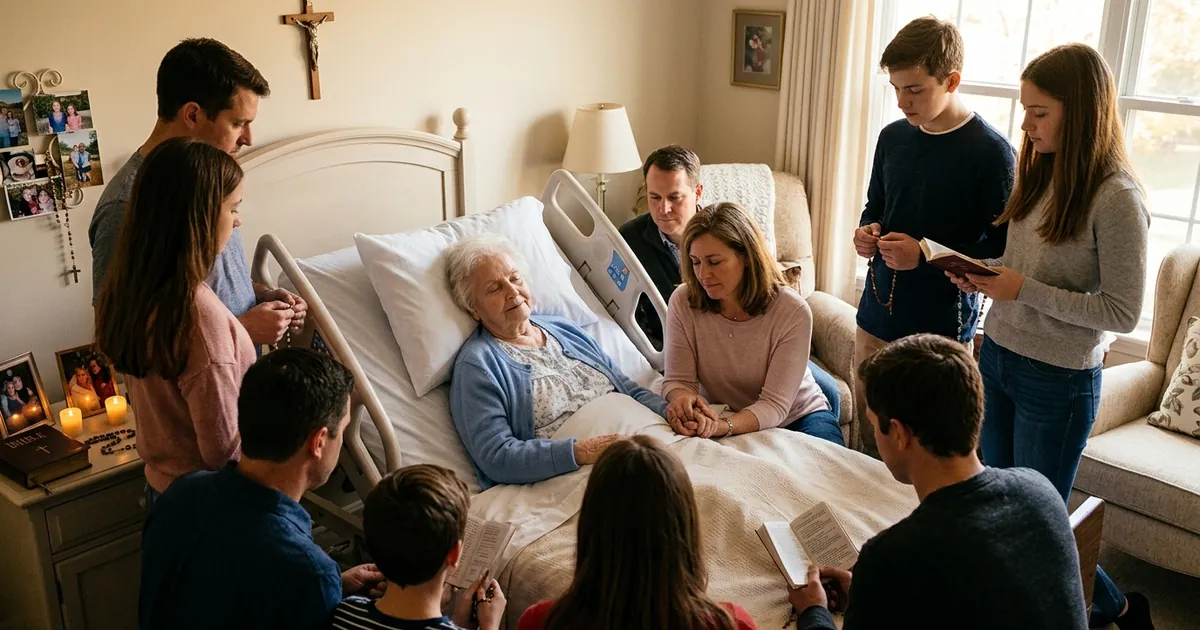
A Catholic novena for a happy death asks for the grace to live and die in faith, peace, repentance, and hope. Catholics may ask Saint Joseph to intercede because tradition presents him as having died in the presence of Jesus and Mary. The devotion does not predict timing, remove pain, or replace medical, hospice, family, or sacramental care.
Prayer to Saint Joseph for a holy death
Saint Joseph, guardian of Jesus and faithful husband of Mary,
pray for us at the hour of our death.
Teach us to live with a clear conscience,
to ask forgiveness without delay,
to receive love without fear,
and to entrust our last hour to God's mercy.
Be near those who are dying,
comfort their families,
guide the hands and hearts of caregivers,
and help the Church bring the sacraments with compassion.
May we meet death not with denial or superstition,
but with faith in Christ's promise of life.
Amen.
Source and tradition: original devotional composition by Unfailing Prayers, inspired by Catholic devotion to Saint Joseph as patron of a holy or happy death. It is not a sacramental formula or a historical prayer text attributed directly to Saint Joseph.
When to contact a priest
If someone is seriously ill, approaching a major operation because of serious illness, weakened by age, or nearing death, contact the person's parish or hospital chaplain promptly. Ask about the Sacrament of Anointing of the Sick, Confession when possible, and Viaticum, the Eucharist given as spiritual food for the final journey when appropriate.
Do not wait for the last minutes if a priest can be called earlier. The priest or chaplain will explain what is pastorally possible. Continue prescribed medical care, pain relief, hospice or palliative support, and the person's own care preferences.
If there is an immediate medical emergency, call local emergency services. Prayer and a request for a priest can happen alongside emergency care.
Common opening
In the name of the Father, and of the Son, and of the Holy Spirit. Amen.
Saint Joseph, patron of a holy death, pray for me and for all who are approaching the end of life. Help us live honestly, reconcile where possible, receive care with humility, and place our hope in God's mercy. Stay near the sick, the dying, and those who love them. Amen.
Daily closing
Saint Joseph, pray for us and for all who are dying. May God grant peace to the sick, wisdom to caregivers, consolation to families, and hope in Christ. Amen.
Our Father. Hail Mary. Glory Be.
Day 1 - The meaning of a holy death
Intention: For understanding, peace, and freedom from fear-based images of death.
Meditation: A holy death is not measured by whether the body suffers or whether the final moments look calm. It concerns trust, love, reconciliation, and hope in God. Ask for the grace to see the whole person, not only the illness.
Prayer: Saint Joseph, help me understand a holy death as a passage entrusted to God's mercy, not as a promise of painless circumstances. Amen.
Day 2 - Reconciliation and forgiveness
Intention: For people who need to ask forgiveness, receive it, or make peace where possible.
Meditation: Reconciliation may include a conversation, a sacramental Confession, a written message, or an interior act of repentance. It cannot always be completed, and it should never require returning to an abusive or dangerous situation.
Prayer: Saint Joseph, guide us toward truthful forgiveness and protect those for whom distance or boundaries are necessary. Amen.
Day 3 - The Sacrament of Anointing
Intention: For sick people and families seeking sacramental care.
Meditation: The Anointing of the Sick is not only for the final breath. It is offered to people whose health is seriously impaired and can bring strength, peace, courage, forgiveness in the Church's sacramental context, and union with Christ.
Prayer: Saint Joseph, help families call the priest in time and receive the Church's care without panic or delay. Amen.
Day 4 - The Eucharist and Viaticum
Intention: For those who may be able to receive Holy Communion near the end of life.
Meditation: Viaticum means food for the journey and refers to the Eucharist given to a person at the end of life when appropriate. Ask the priest or chaplain about timing and the person's condition rather than trying to arrange it through a formula.
Prayer: Saint Joseph, pray that the dying may be accompanied by Christ, the Church, and loving people. Amen.
Day 5 - Care, pain, and presence
Intention: For patients, hospice teams, medical staff, and family caregivers.
Meditation: Good end-of-life care includes attention to pain, breathing, fear, loneliness, spiritual questions, and the person's wishes. Prayer should support compassionate care, not oppose appropriate pain relief or palliative medicine.
Prayer: Saint Joseph, guide caregivers toward skill, patience, and tenderness, and help families ask for the support they need. Amen.
Day 6 - The family and grief before death
Intention: For relatives who are already grieving and for conversations that need to happen.
Meditation: Anticipatory grief can begin before death. Families may need help speaking about wishes, forgiveness, practical arrangements, and faith. Choose a quiet moment and respect the sick person's capacity and consent.
Prayer: Saint Joseph, help families remain present without forcing words, decisions, or emotions. Give them courage to love in the time that remains. Amen.
Day 7 - Trust in God's mercy
Intention: For people afraid of judgment, guilt, or what comes after death.
Meditation: Catholic hope rests in God's mercy revealed in Christ. Trust is not denial of sin; it is the courage to confess, repent, accept forgiveness, and place the future in God's hands.
Prayer: Saint Joseph, pray for those who fear death and for those who cannot yet feel peace. Lead us toward honest repentance and confidence in mercy. Amen.
Day 8 - The dying and the forgotten
Intention: For people who are alone, homeless, imprisoned, estranged, or without a family at the bedside.
Meditation: Every person deserves dignity and care at the end of life. Pray for hospitals, shelters, prisons, nursing homes, parishes, and neighbors who accompany people whose support network is small.
Prayer: Saint Joseph, remember the dying who feel unseen. Move the Church and the community toward practical companionship and protection. Amen.
Day 9 - Hope in Christ
Intention: For the grace to live faithfully now and entrust the final hour to God.
Meditation: Preparing for death is also a way of preparing to live with greater truth, gratitude, and love today. Do not wait for a crisis to reconcile, make a will, discuss care wishes, or ask for spiritual support.
Prayer: Saint Joseph, receive our fear and hope. Help us live the next day faithfully and meet the end of life in the care of God, the Church, and those who love us. Amen.
Sources & Tradition
Frequently asked questions
What does a happy death mean in Catholicism?
It means a death approached with faith, hope, repentance, reconciliation where possible, and trust in God's mercy. It does not mean a death without pain or grief and does not promise a particular medical outcome.
Why is Saint Joseph the patron of a happy death?
Catholic tradition connects Saint Joseph's final years with the presence of Jesus and Mary, although the Gospel does not describe the details of his death. The devotion asks his intercession for a holy and peaceful preparation, not a guarantee about circumstances.
When should I call a priest for a dying person?
Call promptly when someone is seriously ill, approaching the end of life, or needs the Sacrament of Anointing. Ask about Confession and Viaticum as appropriate. Do not wait for the final minutes if help can be arranged earlier.
Does this novena guarantee a painless death?
No. It asks for spiritual care, peace, mercy, and faithful accompaniment. It should never be used to blame a sick person for pain or to discourage medical, hospice, or palliative care.
Can I pray this for someone who is not Catholic?
You may pray for their good and accompany them respectfully, but do not pressure them to accept a sacrament or a religious practice against their wishes. Follow the person's care preferences and ask appropriate pastoral staff for guidance.