page / saint biography, theology, and human-dignity guide
Saint John Paul II: The Body, Human Dignity, and Mercy
Learn Saint John Paul II's Theology of the Body, the meaning of self-giving love, his Culture of Life teaching, and the forgiveness he offered Ali Agca.
Part of the Saints prayer collection.
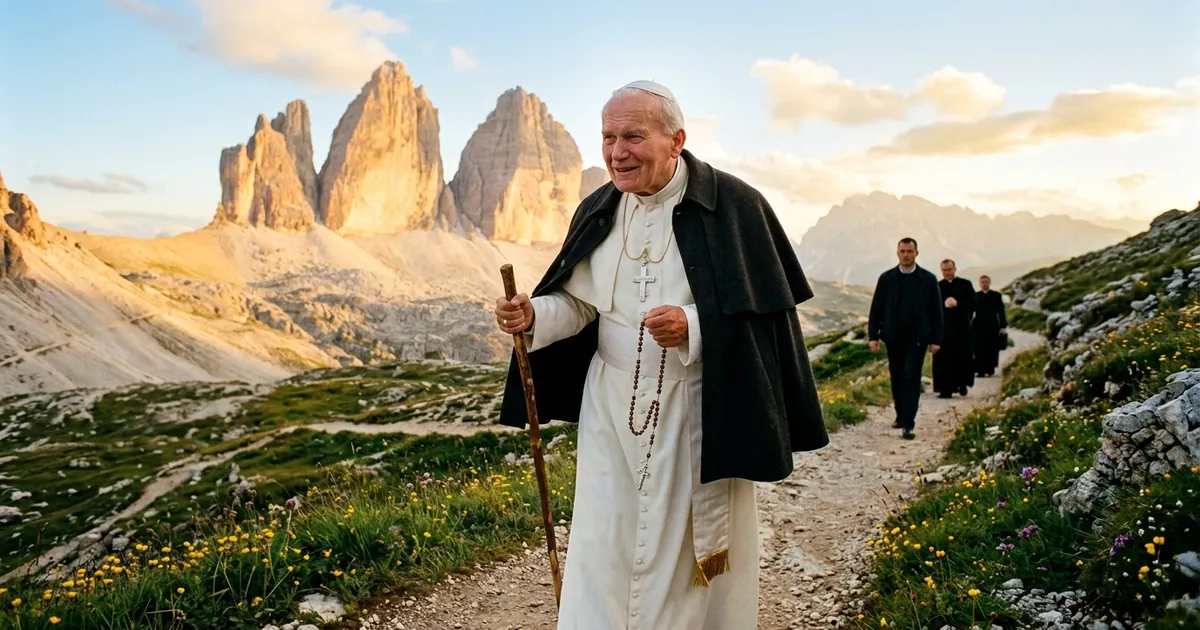
In brief
Saint John Paul II, born Karol Wojtyła (1920–2005), was a Polish priest, philosopher, bishop, and pope who lived through Nazism and communism before leading the Catholic Church from 1978 to 2005. His Theology of the Body teaches that the human person is not a body to use or a mind trapped in matter. The body expresses the person and can reveal a vocation to truthful, faithful, self-giving love.
His Culture of Life teaching insists that every human being has dignity and must never be treated as disposable because of age, illness, disability, poverty, dependence, or lack of usefulness. His visit to Mehmet Ali Agca in prison after the 1981 assassination attempt became a public sign of forgiveness. Forgiveness did not erase justice or the seriousness of the crime; it refused to let hatred have the final word.
A prayer for human dignity and healing
> Saint John Paul II, witness to the dignity of every human person, pray for us. Help us see the body as a gift rather than an object, and teach us to make our freedom truthful and compassionate. Pray for marriages, single people, children, the unborn, the elderly, people with disabilities, the sick, survivors of abuse, and those who are dying. Ask Christ to heal our wounds and to give us courage to forgive without abandoning justice or safety. Amen.
If the intention involves sexual trauma, abuse, pregnancy, serious illness, or end-of-life care, combine prayer with qualified professional and safeguarding support.
A life shaped by suffering and responsibility
Wojtyła lost his mother and brother while young and later lived under Nazi occupation and communist rule. He worked in difficult conditions, studied secretly, acted in theater, and entered the seminary. As a priest and bishop, he accompanied young people, married couples, artists, workers, and people facing political oppression.
His philosophy emphasized the dignity of the person and the importance of freedom ordered toward truth and love. That background shaped his papal writing, but a reader should not treat every political claim made in his name as an official teaching. Read his encyclicals and audiences in context and distinguish his theological principles from later commentary.
The Theology of the Body in simple terms
The Theology of the Body is the name commonly given to a series of Wednesday audiences delivered early in John Paul II's pontificate. He reflected on Genesis, the words and actions of Jesus, the meaning of the body, marriage, celibacy, sin, redemption, and the resurrection.
At its heart is a simple claim: the body is personal. It is not merely a biological object, a product to display, or property another person may use. Through the body, a person can communicate care, fidelity, vulnerability, responsibility, and self-gift. A body can also be violated, exploited, or reduced to a commodity; Christian ethics therefore needs to defend the person's dignity, not only regulate behavior.
The nuptial meaning of the body
John Paul II used “nuptial meaning” to describe the body's capacity to express a sincere gift of self. The body reveals that human beings are made for relationship and that love is more than appetite or possession. In marriage, the Catholic tradition sees sexual union as belonging within a faithful, exclusive, lifelong, and life-open covenant.
This teaching should not be used to shame people who are single, infertile, widowed, celibate, divorced, wounded, disabled, or unable to marry. The body has a nuptial meaning because every person is called to self-giving love, not because every person must marry or produce children. Friendship, family care, consecrated life, service, and faithful celibacy can all express generous love.
The phrase “life-open” also needs pastoral care. Infertility, pregnancy loss, disability, sexual trauma, and marital conflict are not moral failures. Couples who are struggling should seek compassionate pastoral guidance and qualified medical or counseling support.
A Culture of Life
In Evangelium Vitae, John Paul II described a conflict between a culture that protects human life and a culture that treats some lives as burdens or disposable. The “Culture of Life” is not a political slogan limited to one issue. It includes welcoming children, supporting mothers and fathers, caring for the elderly, protecting people with disabilities, opposing torture and trafficking, accompanying the dying, seeking peace, and resisting racism and poverty.
The teaching should be applied consistently. A community cannot claim to defend life while abandoning a pregnant woman, denying food to a child, humiliating a refugee, neglecting a prisoner, or refusing palliative care to a dying person. Defending life means building conditions in which people can receive care and exercise responsibility.
Catholic moral teaching is distinct from medical advice. Decisions about diagnosis, treatment, pregnancy, disability, or end-of-life care require qualified clinicians and, when appropriate, an ethics team, family discussion, and pastoral care. A devotional page should not dictate a patient's individual treatment.
Forgiveness in the prison cell
On May 13, 1981, John Paul II was shot in Saint Peter's Square. In 1983, he visited Ali Agca in Rebibbia prison and spoke with him privately. The pope later described the encounter as forgiveness. The meeting became an image of Christian mercy because he chose not to let the attempted murder define his relationship to the man who committed it.
Forgiveness is not denial, reconciliation without safety, or the cancellation of legal responsibility. A survivor may forgive while maintaining distance, cooperating with justice, and refusing further contact. In situations involving abuse, domestic violence, or coercion, never pressure a victim to meet or reconcile with the offender. Mercy protects truth and the vulnerable.
Fatima, Poland, and political hope
John Paul II attributed his survival to the intercession of Our Lady of Fatima, especially because the shooting occurred on May 13, the feast associated with the Fatima apparitions. That is his devotional interpretation, not a laboratory explanation of the event.
His support for human dignity and the Solidarity movement in Poland contributed to the moral resistance against communist oppression. The collapse of communism involved many historical, social, economic, and political causes. A Christian may see providence in history without erasing the work and risk of ordinary people or claiming that one private interpretation explains everything.
Related prayers and guides
Anti-thin-content test
- Clear reason to exist: translates the Theology of the Body, nuptial meaning, Culture of Life, forgiveness, Fatima, and the saint's biography into a readable guide.
- Practical usefulness: gives a prayer, answers common questions, and directs health, trauma, relationship, and safeguarding matters to qualified care.
- Distinctive depth: connects sexual ethics and human dignity with mercy, disability, poverty, end-of-life care, and justice rather than reducing them to slogans.
- Intent satisfied: a reader can understand the basic teaching and apply it through truthful love, dignity, boundaries, and service.