page / saint biography, sacramental life, and suffering-sensitive guide
Saint Padre Pio: The Stigmata, the Confessional, and Faithful Prayer
Learn about Saint Padre Pio's stigmata, Eucharistic devotion, confession, obedience during Church investigations, and a prayer for after Communion.
Part of the Saints prayer collection.
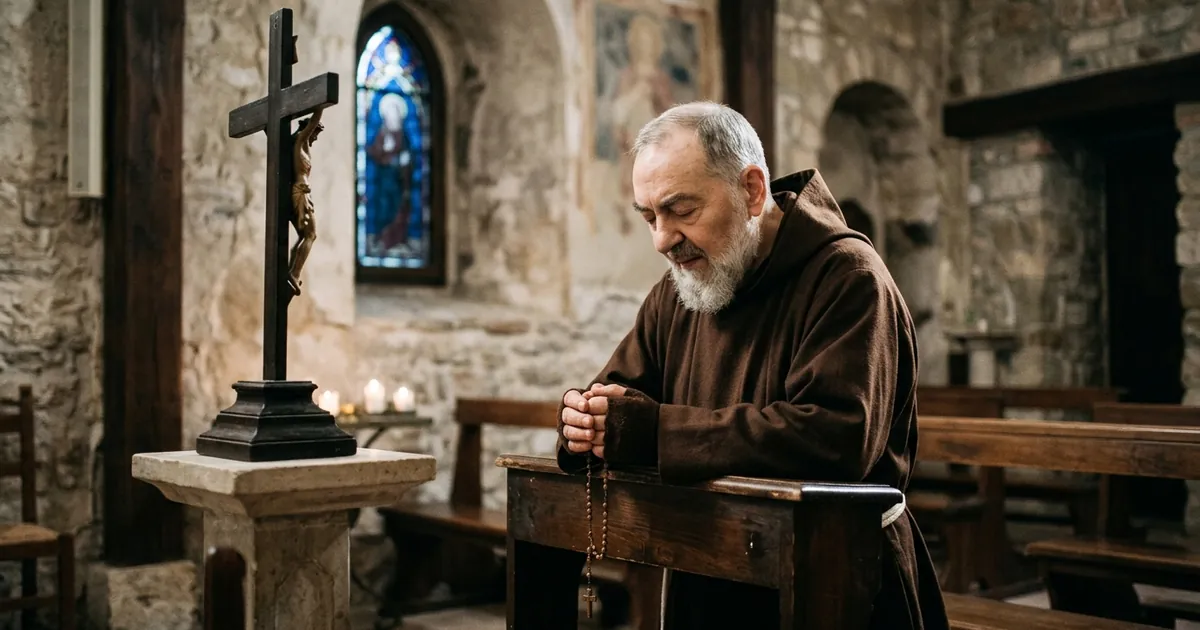
In brief
Saint Padre Pio of Pietrelcina (1887–1968) was an Italian Capuchin friar and priest known for his long ministry of confession, Eucharistic devotion, prayer, and reported mystical experiences, including the stigmata. The Catholic Church canonized him in 2002. His life should not be reduced to photographs of wounds or stories of extraordinary gifts. His lasting witness includes repentance, compassion in the confessional, endurance in illness, love for the Eucharist, and obedience to the Church during difficult investigations.
The stigmata are wounds resembling those of Christ's Passion and belong to the realm of mystical testimony, not a power that can be summoned or copied. Padre Pio did not invite people to chase phenomena. He directed them toward Jesus, the sacraments, the Rosary, honest confession, and practical charity.
A prayer through suffering
> Saint Padre Pio, faithful priest and servant of the suffering, pray for [Name] and for all who feel worn down in body, mind, or spirit. Help us bring pain to Christ without glorifying harm, seek the care we need, and remain open to mercy. Intercede for priests and penitents, for people afraid to return to confession, and for families carrying hidden burdens. May our prayer become patience, truth, and concrete love. Amen.
This prayer does not promise a cure. It asks for healing when possible, wise treatment, trustworthy support, and the grace to endure what cannot immediately be changed.
A brief life
Francesco Forgione was born in Pietrelcina, Italy, in 1887 and entered the Capuchin Franciscans, taking the religious name Pio. He was ordained a priest in 1910 and spent most of his ministry in San Giovanni Rotondo. People came for confession, Mass, spiritual direction, and prayer.
His ministry attracted devotion and controversy. Church authorities investigated reports about his health, mystical experiences, and the crowds around him. Restrictions were imposed and later modified over time. A responsible account should distinguish official documents, disciplinary measures, witness testimony, popular stories, and the later process of beatification and canonization.
The stigmata without sensationalism
In 1918, Padre Pio reported receiving visible wounds corresponding to the wounds of Christ. The phenomenon continued for decades and was examined by physicians and Church authorities. The existence, cause, and interpretation of the wounds have been discussed in medical, historical, and ecclesial contexts; a devotional page should not claim to provide a scientific diagnosis or proof.
For Padre Pio, the wounds were not a celebrity credential. They were painful, embarrassing, and connected in his spirituality with participation in Christ's suffering. Catholic teaching does not say that every illness or wound is a special divine assignment, nor that people should seek pain. The Cross can be united to love, but medical treatment, pain relief, and safeguarding remain legitimate and necessary.
The phrase “redemptive suffering” should be used carefully. Christ's sacrifice is unique and complete. A Christian may offer unavoidable pain in prayer and solidarity, but no one becomes a substitute savior. If suffering can be reduced, preventing harm and seeking treatment are acts of charity.
Investigations and obedience
The Holy Office, now the Dicastery for the Doctrine of the Faith, investigated Padre Pio at different points in the twentieth century. He experienced restrictions on public ministry, including limitations connected with Mass and confession. The precise dates, reasons, and scope should be checked against official historical records rather than repeated through dramatic retellings.
The devotional lesson is not that every Church decision was perfect or that authority can never be questioned. Nor is the lesson that a charismatic person should leave the Church when misunderstood. Padre Pio continued to live as a friar and priest within the Church while investigations and restrictions unfolded. His patience, prayer, and refusal to build a rival authority can be held alongside the need for fair investigation, accountability, and protection from abuse.
The confessional
Padre Pio became known for spending long hours hearing confessions. Stories about his ability to know forgotten sins are part of his devotional reputation; they should not be used to frighten penitents or to excuse a confessor's harshness. The sacrament of reconciliation depends on God's mercy, a priest's ministry, and the penitent's honest repentance—not on extraordinary perception.
If you are afraid to go to confession, begin simply: tell the priest that you are nervous and ask for help. You do not need to produce a theatrical account or remember every detail perfectly. A priest should respect the seal of confession and treat a penitent with dignity. If someone uses confession to threaten, manipulate, or abuse you, seek help from the diocese or safeguarding authorities.
The Eucharist and “Stay with me, Lord”
A prayer commonly associated with Padre Pio is “Stay with me, Lord,” often used after Communion or in Eucharistic adoration. Because versions and attributions vary, the final page should identify the text as commonly associated with Padre Pio unless a reliable primary source establishes authorship.
You can pray an original short prayer after Communion:
> Stay with me, Lord Jesus. Keep me near you when I am distracted, proud, afraid, or tired. Make your presence in the Eucharist bear fruit in the way I speak, work, forgive, and serve. Help me receive your mercy without seeking extraordinary signs, and give me courage to carry today's duties in love. Amen.
If you use a longer published version, follow the copyright and translation policy of the selected edition. The spiritual point is simple: Eucharistic prayer should lead to communion with Christ and a life of charity, not to spiritual performance.
Confession, the Rosary, and ordinary holiness
Padre Pio's ministry is often summarized by three practices: Eucharist, confession, and the Rosary. These are not magical tools. The Eucharist is received according to the Church's discipline; confession includes sincere contrition and a purpose of amendment; the Rosary meditates on the life of Christ with Mary.
A realistic practice may be:
- Set a regular time for Sunday Mass and prayer.
- Ask a parish about confession times and preparation.
- Pray one decade of the Rosary if a full Rosary feels overwhelming.
- Read a Gospel passage and identify one act of mercy.
- Seek medical or pastoral support when suffering requires it.
Related prayers and guides
Anti-thin-content test
- Clear reason to exist: places Padre Pio's stigmata within his priesthood, confession, Eucharist, Rosary, investigations, obedience, and suffering theology.
- Practical usefulness: gives an original post-Communion prayer, confession preparation, a suffering prayer, and clear care boundaries.
- Distinctive depth: rejects sensationalism while preserving the spiritual lesson of patience, mercy, and accountability.
- Intent satisfied: a reader can pray, prepare for confession, understand the historical tension, and avoid harmful imitation.