post
Building the Domestic Church: A Realistic Guide for Parents
Start Catholic family prayer with realistic one-to-five-minute routines for babies, children, teenagers, and tired parents. Build a domestic church without guilt or perfectionism.
Part of the Tools prayer collection.
In brief
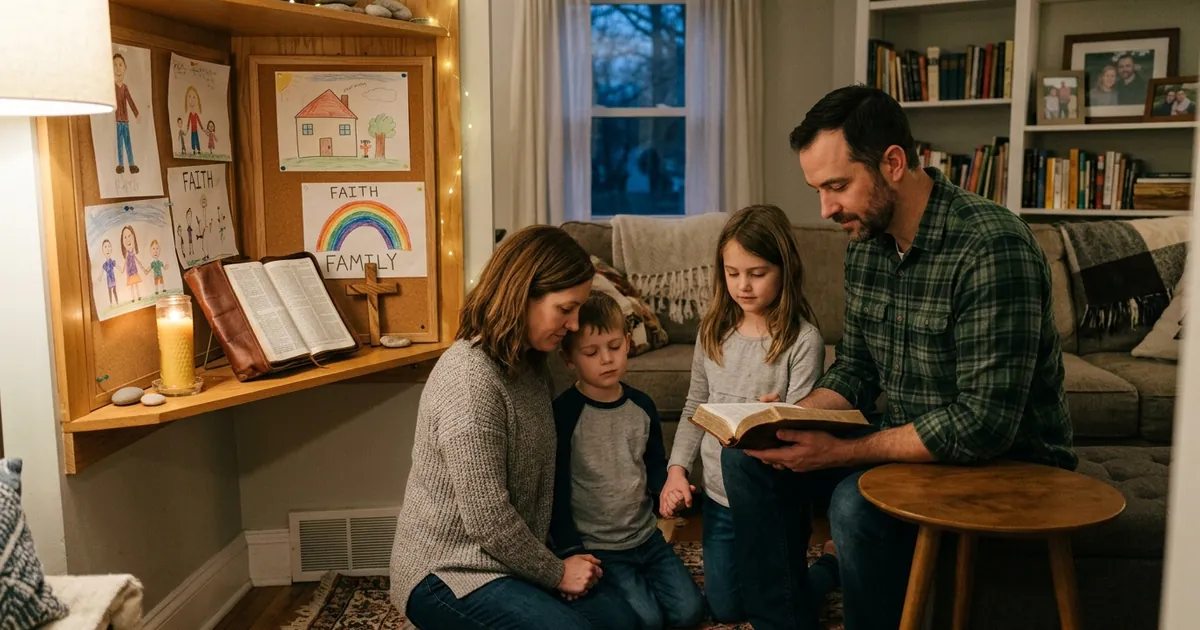
To build a domestic church, choose one short prayer connected to an existing routine, pray it consistently for a week, and add another practice only when the first is stable. The family lives faith through prayer, Scripture, worship, forgiveness, hospitality, and daily care; it does not need a perfect twenty-minute ceremony every night.
Prayers for chaotic moments
When nobody is cooperating
God, you know this family as we are. Give us patience for the next minute, help us speak with kindness, and receive this imperfect prayer. Amen.
Before school or work
Jesus, guide our words, protect the people we meet, and help us do the next good thing. Amen.
After an argument
God of peace, help us tell the truth without cruelty, listen without preparing a defense, and repair what we damaged when it is safe to do so. Amen.
These short prayers are original compositions. They are not a substitute for addressing serious conflict, abuse, or mental-health needs.
When family prayer is not safe
Do not require a person to pray publicly with someone who uses religion to control, threaten, or abuse them. Protect children and vulnerable adults, seek specialized support, and allow private prayer or distance when needed. A domestic church is not a reason to conceal violence.
Start with one minute
Choose one anchor:
- Morning: make the Sign of the Cross before leaving the room.
- Meal: say a short grace before eating.
- Bedtime: thank God for one good thing and ask help for one concern.
- Transition: say, "Jesus, be with us," before school, work, or a medical appointment.
When the family is ready, add a Gospel sentence, a Hail Mary, a decade of the Rosary, or a short intercession. A prayer that is repeated peacefully is more useful than a long plan that creates nightly conflict.
A four-week implementation plan
Week 1 - A shared beginning
Use the Sign of the Cross at one predictable moment. Adults model the action without demanding perfect stillness. If a child wanders, continue calmly and invite them back without shame.
Week 2 - Add gratitude
Each person who wants to participate names one thing for which they are grateful. A child can name a meal, friend, toy, animal, or person. Do not correct the answer into a lesson every time.
Week 3 - Add intercession
Pray for one person or need. Keep private information private and let children pass if they do not want to speak aloud. Include people who are sick, lonely, grieving, or doing difficult work.
Week 4 - Add Scripture or a decade
Read three to five verses from the Gospel or pray one decade of the Rosary. Stop while the experience is still manageable. The goal is to build a path back to prayer, not to complete every possible devotion.
Routines by age
Babies and toddlers
Use a blessing, a song, a short Sign of the Cross, or one sentence of thanks. Keep objects safe and avoid forcing a child to kneel or remain still for longer than they can manage.
Young children
Let them choose between two short options, repeat a response, light an electric candle, or hold a picture. Teach one prayer line at a time and explain its meaning in ordinary language.
Older children and teenagers
Offer choice: Scripture, music, silence, a decade, or a written intention. Respect questions and avoid treating doubt as disrespect. Invite responsibility without making a teenager perform belief for the household.
Adults and caregivers
Share leadership. A tired parent should not carry every prayer, meal, appointment, and emotional burden alone. A two-minute prayer led by one person is enough for a difficult day.
A simple weekly review
At the end of the week, ask:
- Did this practice help us pay attention to God and one another?
- Was it short enough to repeat?
- Did anyone feel pressured or unsafe?
- What one change would make next week gentler?
Adjust the routine. A household is not failing because the plan needs to change.
Sources & Tradition
Frequently asked questions
What is the domestic church?
Catholic teaching uses the term for the family as a place where faith, love, prayer, service, and Christian life are learned and lived. It is not a perfect miniature parish and does not erase the need for the wider Church community.
How do I start Catholic family prayer if we never have before?
Start with one minute at an existing routine: a blessing, one thank-you, or one short prayer before bed. Repeat it for a week before adding anything else.
What if my children will not sit still?
Shorten the prayer, use movement or song, give a simple role, and stop before the moment becomes a battle. Children can learn prayer gradually.
Do we have to pray the Rosary every night?
No. The Rosary is a valuable devotion, but a household can begin with a single decade, a Gospel passage, grace before meals, or a short prayer. Choose a practice that fits the family.
What if one family member does not share the faith?
Respect their freedom. Invite without pressuring, use gratitude or service that everyone can share, and do not turn participation into a test of belonging.