page / catholic bioethics and pastoral guide
Catholic End-of-Life Care: Dignity, Suffering, and a Good Death
A compassionate Catholic guide to end-of-life decisions, euthanasia, palliative care, feeding tubes, and proportionate versus disproportionate medical treatment.
Part of the Catholic learning prayer collection.
In brief
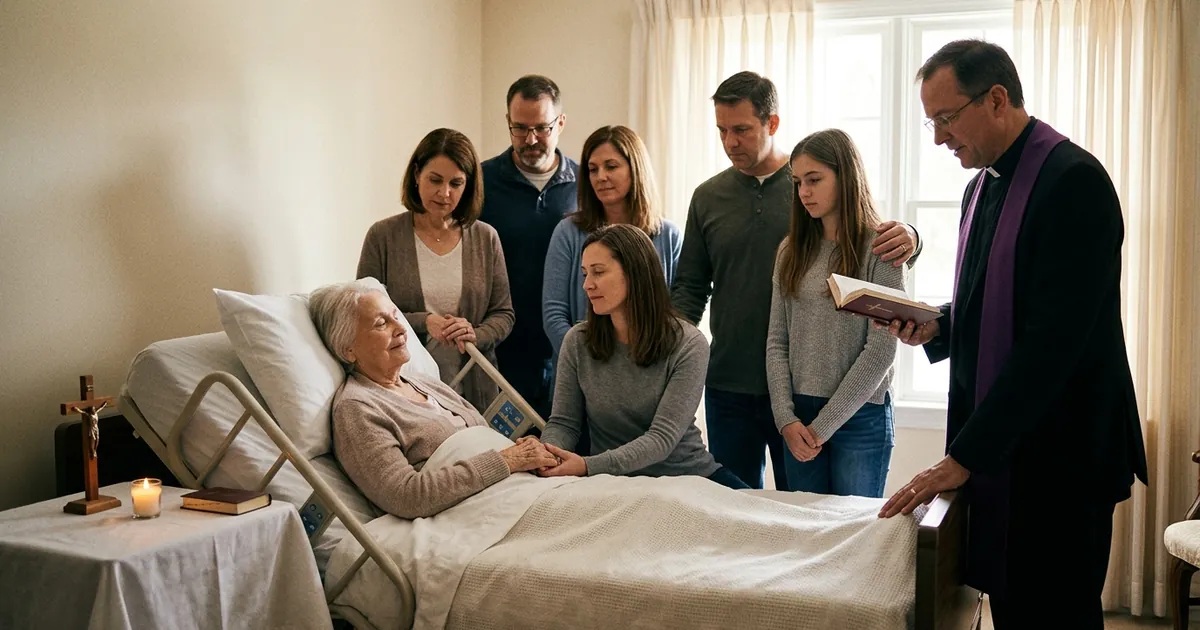
Catholic teaching rejects euthanasia and assisted suicide because they intentionally cause death. It also teaches that a patient is not morally required to accept every possible treatment, especially when a treatment offers little benefit or imposes a disproportionate burden. A person may accept the limits of medicine, receive comfort care, and allow an underlying illness to take its course without intending death.
The difference between stopping a treatment and killing a patient depends on the act, the intention, the burden, the likely benefit, and the patient's condition. Feeding tubes, ventilators, dialysis, surgery, and medication cannot be classified responsibly by slogan alone. Decisions must be made with the treating team, the patient or authorized decision-maker, a chaplain or priest, and—when needed—an ethics consultant.
A prayer at the bedside
> Saint Joseph, faithful guardian of Jesus and Mary, stay near all who are sick and dying. Ask God to give patients peace, families wisdom, clinicians compassion, and caregivers strength. Help us reject both abandonment and needless burden, receive comfort with gratitude, and entrust every life to the mercy of Christ. Amen.
Euthanasia versus allowing natural death
Euthanasia intentionally causes death to eliminate suffering, whether by an act such as a lethal injection or by an omission chosen specifically to kill. Catholic teaching rejects it even when the motive is compassion.
Allowing natural death means declining or withdrawing a treatment that is excessively burdensome, medically futile, unavailable, or no longer proportionate to the expected benefit. The intention is to stop the treatment, not to kill. Death results from the underlying illness or condition.
Intent matters, but intention alone cannot make any action acceptable. A clinician and family must also ask what the treatment actually does, what burdens it creates, and whether it can still benefit the patient.
Proportionate and disproportionate means
Older Catholic language often speaks of ordinary and extraordinary means. Many contemporary sources prefer proportionate and disproportionate means because “ordinary” can sound like every familiar treatment is always obligatory.
- Proportionate care offers a reasonable hope of benefit and does not impose excessive pain, cost, risk, or burden in the patient's circumstances. It is ordinarily morally required.
- Disproportionate care offers no reasonable hope of benefit or imposes a burden that is excessive compared with the expected benefit. It may be refused or withdrawn.
The same treatment can be proportionate for one patient and disproportionate for another. The assessment changes with prognosis, pain, consciousness, risks, family context, resources, and the patient's values. “Extraordinary” does not mean technologically advanced only; a familiar treatment can become disproportionate.
Food, water, and feeding tubes
Basic care—warmth, hygiene, human presence, ordinary comfort, and appropriate food and fluids—should not be withheld with the intention of causing death. Artificial nutrition and hydration, however, are medical interventions whose benefit and burden must be assessed in the individual case. A feeding tube can be proportionate in one situation and burdensome or ineffective in another, such as when the body cannot assimilate nutrition or the intervention causes serious complications.
No one should remove a feeding tube because an online article says it is always ordinary or always extraordinary. Ask the clinical team what the tube is doing, what complications exist, whether the body can use the nutrition, and what comfort plan will follow. A Catholic chaplain, priest, hospital ethics committee, or diocesan bioethics resource can help apply Church principles.
Ventilators, dialysis, and surgery
Life-sustaining treatments are not automatically obligatory merely because they can delay death. A ventilator may be temporary and beneficial for a reversible crisis, or it may impose severe burdens without a realistic path to recovery. Dialysis may sustain meaningful life for one person and become disproportionate when it cannot achieve its purpose or creates intolerable harm.
A treatment should not be stopped because a person's life is considered less valuable due to disability, age, dementia, or dependence. The question is the treatment's proportionality and the patient's dignity, never whether the patient is “useful.”
Palliative care and hospice
Palliative care treats pain and other symptoms while supporting emotional, social, and spiritual needs. It can be offered alongside treatment intended to cure or stabilize an illness. Hospice focuses on comfort when the goals of care have shifted away from curative treatment.
Good palliative care does not mean abandoning the patient. It means refusing to measure care only by whether it extends biological life. A team can address pain, breathlessness, anxiety, delirium, family conflict, prayer, and practical planning.
Strong pain medication can be morally acceptable when the intention is relief and the dosage is proportionate, even if a foreseeable but unintended side effect could shorten life. This principle requires careful clinical judgment; it is not permission to give a lethal dose or hide an intention to kill.
Advance directives and decision-making
An advance directive can record a person's values, treatments they would accept or refuse, and who may speak when they cannot. It should be completed before a crisis with an attorney or qualified advance-care-planning professional and discussed with family and clinicians.
A surrogate should use the patient's known wishes and best interests, not their own convenience or fear. A durable power of attorney for health care is different from a general financial power of attorney. Laws vary by jurisdiction, so this page cannot provide a legal form.
Ask the care team:
- What is the diagnosis and likely course?
- What is the goal of each proposed treatment?
- What benefits and burdens are realistic for this patient?
- What happens if we accept, delay, or stop it?
- What comfort, nursing, and spiritual care will continue?
- Who can help us if the family disagrees?
Saint Joseph and a peaceful death
Catholic devotion calls Saint Joseph the patron of a happy or peaceful death. The Gospels do not describe the details of his death, so the tradition that he died in the presence of Jesus and Mary should be labeled as devotional tradition rather than a documented biography.
The prayer remains meaningful: Joseph can be invoked as a model of trust, family care, and a life placed in God's hands. Devotion should accompany honest medical decisions, symptom treatment, reconciliation, and the presence of loved ones—not replace them.
Related prayers and guides
Anti-thin-content test
- Clear reason to exist: translates Catholic end-of-life principles into careful questions families can take to a care team.
- Practical usefulness: distinguishes euthanasia, proportionate treatment, feeding tubes, palliative care, directives, and spiritual support.
- Distinctive depth: avoids categorical online rulings about interventions that require case-by-case medical assessment.
- Intent satisfied: a family can understand the framework and identify the responsible people to call.